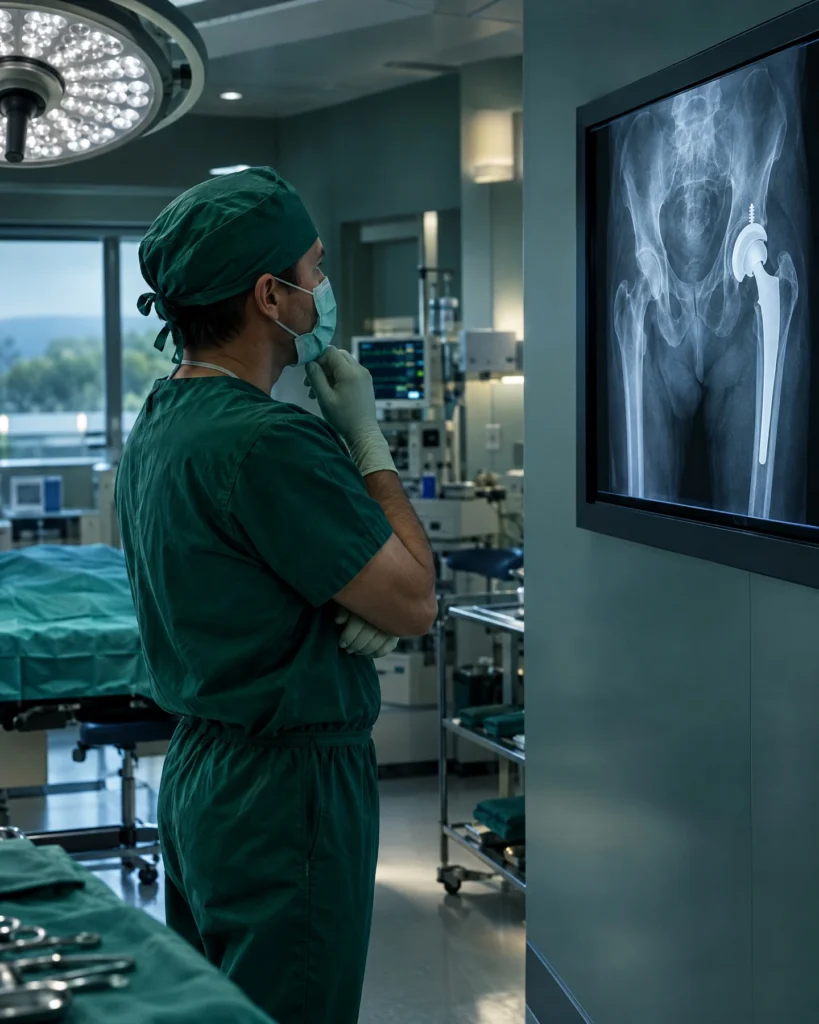


Osteoarthritis is the most common cause of hip pain in adults over 50, and the most common reason people need a hip replacement. It develops when the smooth cartilage lining the joint wears thin, so the bones no longer glide easily against each other.
What is hip osteoarthritis?
The hip is a ball-and-socket joint. In osteoarthritis, the cartilage that cushions the ball and socket gradually breaks down. The joint can become inflamed, bony spurs may form at the edges, and the hip becomes stiffer and more painful over time. How quickly it progresses varies widely from person to person.
Common symptoms
- Pain in the groin, buttock or front of the thigh, sometimes felt in the knee
- Stiffness first thing in the morning or after sitting
- Difficulty putting on socks and shoes or cutting your toenails
- A limp, or needing a stick on longer walks
- Pain that wakes you at night as the condition progresses
Causes and risk factors
Osteoarthritis is linked to age, genetics and the shape of the hip. A previous injury, childhood hip conditions such as hip dysplasia, and carrying extra weight can all increase the load on the joint. Often there is no single cause.
How it is diagnosed
Mr Allen will ask about your symptoms and how they affect your daily life, then examine how your hip moves. An X-ray usually confirms the diagnosis by showing narrowing of the joint space. An MRI scan is only occasionally needed, for example when the X-ray looks normal but your symptoms suggest another cause.
Treatment options
Treatment follows a step-by-step approach. Most people start with simple measures, and surgery is considered only when pain and stiffness keep limiting your life despite them.
- Activity changes and, where relevant, a weight-management plan
- Physiotherapy to keep the hip strong and flexible
- Pain relief and anti-inflammatory medicines, as advised by your GP or pharmacist
- A walking stick for longer distances
- Total hip replacement when symptoms remain severe
When to see a specialist
Ask your GP for a referral, or book a private consultation directly, if hip pain lasts longer than a few weeks, stops you doing everyday activities or is getting steadily worse.
This page is general information and not a substitute for personal medical advice. If you have sudden severe pain, a high temperature or cannot bear weight, seek urgent medical help.